When Corporations Sue Countries
When Corporations Sue Countries: How international arbitration allows investors to challenge governments—and why some states hesitate to regulate By Mo Hasan
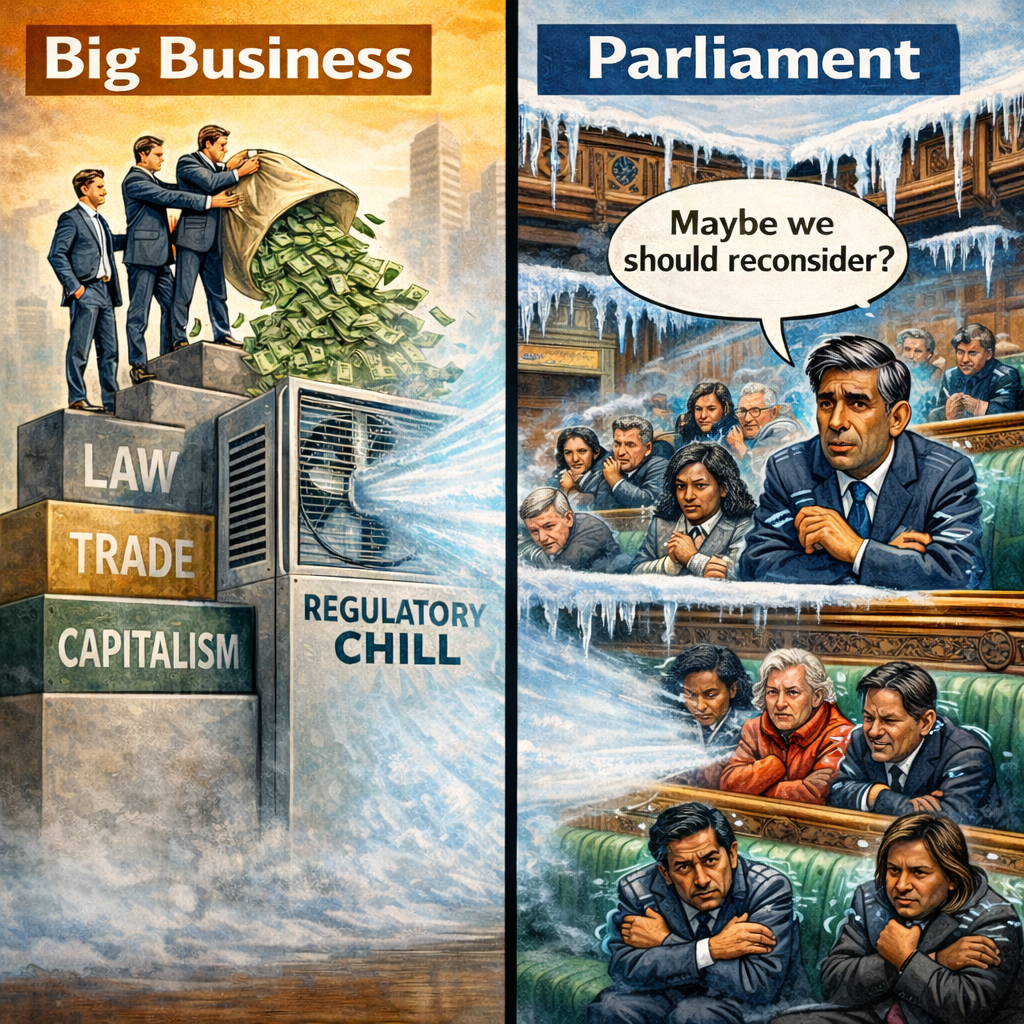
A Letter That Chilled a Government
In 2010, officials in Togo considered a modest public health reform. Smoking rates were rising, and the government wanted larger health warnings on cigarette packs—fewer opportunities for branding, no ban on tobacco, just clearer labels.
Before a single law was passed, letters arrived. British American Tobacco (BAT) warned Togo it could face years of arbitration and millions in damages. Philip Morris went further, writing directly to Togo’s Minister of Commerce: the proposed rules could breach trade and investment agreements and trigger “incalculable international trade litigation.”
To put it in perspective: in 2010, Togo’s GDP was $3.4 billion, while Philip Morris International pulled in $27.2 billion—eight times the entire output of the Togolese economy in a single year. Even a successful legal defence could cost tens of millions—enough to cripple public finances. The policy stalled.
The threat alone was enough to make officials pause.
When Australia Drew the Line
In 2011, Australia went further. With a GDP of $1.3 trillion, it could afford to take on a tobacco giant. The government became the first in the world to enforce plain packaging for cigarettes: logos gone, colours stripped, packs replaced with standard fonts and graphic health warnings.
Philip Morris immediately challenged the law under the Australia–Hong Kong Bilateral Investment Treaty, claiming it destroyed trademarks and violated investor protections.
The case went to an ISDS tribunal, attracting global attention—PMI’s victory could have let corporations challenge public health laws worldwide.
Australia’s defence was straightforward: plain packaging was a legitimate public health measure, and Philip Morris had restructured its operations to gain treaty protection—a tactic the tribunal could dismiss. After years of arbitration, the claim was rejected. The law stood, but Australia still spent millions in legal fees—a stark warning of the costs smaller states face when taking on powerful corporations.
ISDS: The Legal System Most People Have Never Heard Of
Investor–State Dispute Settlement (ISDS) lets companies bypass domestic courts and take disputes directly to international arbitration panels. Many cases are handled under institutions like the International Centre for Settlement of Investment Disputes (ICSID) or UN arbitration rules.
The system exists because countries sign Bilateral Investment Treaties (BITs) to protect their investments abroad. These treaties typically guarantee:
Compensation for expropriation – governments cannot seize assets without fair payment
Fair and equitable treatment – investors are assured basic legal protections
Non-discrimination – foreign investors must be treated the same as domestic ones
If a government violates these protections, investors can take their case to an international tribunal. In theory, it protects companies investing in countries with weak or politicised courts. In practice, it has become a global network of private tribunals capable of challenging government policy.
Why It Matters
ISDS cases can demand hundreds of millions—or even billions—of dollars. Governments must hire specialist lawyers, and disputes can drag on for years. Even when a state wins, legal costs often reach tens of millions. For large economies, this may be manageable. For smaller states, it can be devastating. The risk isn’t just losing a case—it’s having to fight one at all.
This is where regulatory chill enters the conversation. Governments may delay, weaken, or abandon policies out of fear of costly investor lawsuits. Imagine a government planning a new environmental regulation. Officials know it’s necessary, but lawyers warn it could trigger an arbitration claim. Suddenly, the question shifts from:
Is this policy good for the public?
To:
Can we afford the legal risk?
ISDS can shape the boundaries of what governments feel able to regulate.
When governments write new laws, who really decides how far they can go?
Watching from the Sidelines
Wealthy governments may fight. Smaller countries often yield. Regulatory chill affects public health, environmental protection, energy policy, and financial regulation. The tobacco disputes offer one of the clearest illustrations: even well-designed policies can stall under legal pressure.
Critics argue ISDS has shifted power too far—giving corporations a legal tool to challenge democratic regulation. Supporters counter that investor protections are essential for economic stability. The tension lies at the heart of the debate.
Why It Matters in the UK
For many in Britain, ISDS feels remote. But foreign ownership of key infrastructure—energy networks, transport, and water utilities—makes it relevant at home. Last year, the UK faced its first ISDS claim after an English High Court revoked approval for a new coal mine due to environmental impacts.
Thames Water, the UK’s largest water utility, is owned by international investors and sovereign wealth funds. When essential services are foreign-controlled, government actions—tightening environmental rules, restructuring debt, or taking temporary control—can trigger ISDS claims. Policymakers must weigh legal exposure alongside political and economic consequences. Post-Brexit FTAs have further expanded ISDS provisions.
Can the System Be Fixed?
ISDS is no longer a niche legal issue. Governments, scholars, and international organisations are actively debating reform. Many argue the system shouldn’t be scrapped, but rebalanced.
Key proposals include:
Greater transparency: open hearings and published decisions to increase accountability
Clearer legal standards: defining vague treaty terms such as “fair and equitable treatment”
A permanent investment court: replacing ad hoc panels with a standing court with precedent, appellate review, and legitimacy
Several countries have renegotiated or terminated older treaties. Newer agreements increasingly include explicit protections for governments’ right to regulate public health, the environment, and financial stability.
Yet the core dilemma remains: investors want predictable protections; governments want freedom to legislate in the public interest. Designing a system that allows both is the real challenge.
Until that balance is struck, the most powerful effect of ISDS may not be the cases it decides—but the laws governments never dare to write.